

0
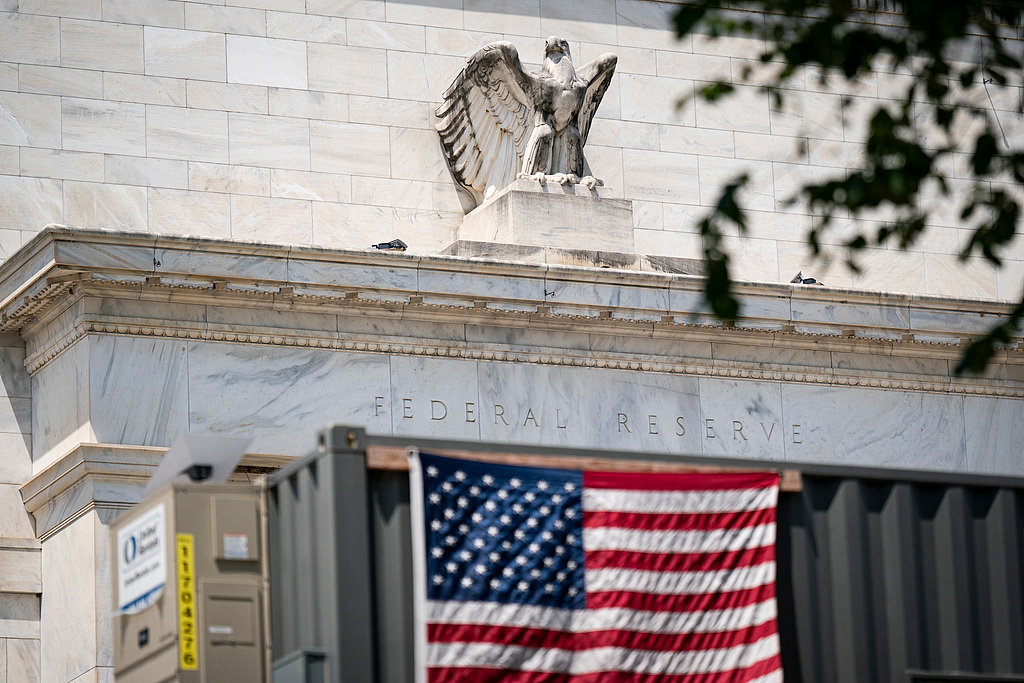
The Federal Reserve will convene its FOMC meeting from October 27 to 28. Market consensus points to the policy rate remaining unchanged at this gathering. Even if the decision turns out to be steady, institutional investors will closely parse the policy statement for clues on the Fed’s future policy path and inflation trajectory.
This marks the fourth FOMC meeting under Chair Kevin Warsh, who was nominated by the U.S. President earlier this year. Since taking office, market participants have kept a close eye on the independence of Fed monetary policy.
The meeting falls just six days ahead of the U.S. midterm elections. Elevated gasoline and food prices have pushed household living costs higher and become a central election issue. Meanwhile, high mortgage rates continue to weigh on housing demand. The average 30‑year mortgage rate hit a three‑year high of 7.4% earlier this month before edging down to 7.32% last week, well above the sub‑6.2% level seen one year ago. Data from Oxford Economics shows that rapid rate hikes this year have priced an additional 5 million U.S. households out of homebuying. Any renewed Fed rate increase would likely send mortgage rates even higher. Against this backdrop of intertwined economic and political forces, five core areas deserve market attention.
1. Meeting Tone: Dual Pressures Beneath a Likely Unchanged Rate Outcome
The base case is for rates to stay on hold, yet the operating environment for policymakers remains complex. With midterm elections approaching, inflation pressures from energy and food prices persist alongside high mortgage rates. Every nuance in the policy statement will be scrutinized by markets and the public.
Against the backdrop of ongoing debates over policy independence and the electoral timeline, market focus extends far beyond the rate decision itself. Investors will assess language covering inflation, employment and the forward policy path. Fed officials must strike a balance: staying committed to bringing inflation down while avoiding excessive tightening that damages economic growth. Markets will look to the statement to judge whether the Fed intends to pause and await data, or reserve room for future policy adjustments.
2. Rate Hike Odds: Broad Market Expectations for a Pause in October
After inflation surprised to the upside for two consecutive months, markets briefly priced in a 25‑basis‑point hike that would lift rates to around 4.1%. Under standard monetary policy frameworks, the Fed raises borrowing costs to cool consumption and investment and ease price pressures.
Nevertheless, recent public remarks from multiple FOMC senior officials have significantly reduced market pricing for an October hike. Interest rate futures now almost fully rule out a rate increase at this meeting. Fed Vice Chair Philip Jefferson has noted that long‑term rates in financial markets have risen notably, and policymakers need additional time to assess underlying economic conditions.
Heading into the midterm elections, the Fed has incentive to keep policy steady to avoid actions susceptible to political interpretation. These official communications have reinforced the broad market view that rates will remain unchanged.
3. Forward Guidance: Tension Between the Chair’s Framework and Officials’ Public Messaging
Recent commentary from Fed officials has renewed market focus on Warsh’s well‑documented stance toward forward guidance. Forward guidance refers to the communication practice used by prior Fed leadership to signal the expected future policy path in advance. Warsh has long expressed reservations about this approach, arguing that rigid guidance limits the Fed’s flexibility to adjust policy in response to incoming economic data.
However, recent public remarks from several senior officials have effectively delivered de facto verbal guidance, separate from messaging originating from the Chair. Two scenarios are being considered by markets. First, Warsh endorses these communications, which would call into question his stance against formal forward guidance. Second, Warsh does not back these informal signals, opening the possibility of a surprise hike to reset market expectations and end unofficial guidance. Even with these scenarios on the table, the probability of an October rate increase remains low based on current market pricing.
4. Policy Independence: Concerns Eased by September Hike, Yet Uncertainty Lingers
At the September FOMC meeting, Warsh delivered a rate increase despite external political preferences, which partly alleviated market worries over political interference in Fed policy. Prior to Warsh’s nomination, the President had publicly stated a preference for a Chair inclined toward rate cuts. The September decision was received positively by markets and temporarily calmed independence concerns.
Since the September meeting, the administration has renewed efforts to remove Fed Governor Lisa Cook. A successful removal would create another vacant seat on the Board of Governors; the Supreme Court blocked an earlier attempt to remove her in June. Following the September meeting, the President disclosed that he had contacted Warsh to urge a vote for tighter policy and characterized the FOMC as politically motivated. Warsh declined to comment on communications with the President during the post‑meeting press conference. The scope and boundaries of these discussions remain unclear, leaving questions around the Chair’s policy independence unresolved.
5. Inflation Assessment: Spillover Risks from Energy Costs Set the Stage for December
Inflation prints have topped forecasts for two months running, raising concerns that rising gasoline prices will propagate through supply chains and lift broad consumer prices. U.S. diesel prices climbed to a record USD 6.53 per gallon at end‑September before retreating moderately to USD 6.35. Diesel is a critical input across logistics networks; higher diesel costs push up transportation expenses for food and manufactured goods, and businesses may pass these costs on to consumers, broadening inflationary pressures across sectors.
Since the final quarter of 2020, U.S. inflation has consistently failed to reach the Fed’s 2% annual target over full calendar quarters. Should Warsh reiterate hawkish rhetoric this week and emphasize that inflation remains too high while committing to a timely return to the 2% target, markets will interpret this as a strong signal for a potential rate hike in December. His assessment of inflation will shape not only the interpretation of this meeting but also market pricing for policy at year‑end.
Dissenting Votes: Internal Divisions May Signal Ongoing Inflation Vigilance
The September rate decision passed unanimously. Markets nevertheless expect 2 to 3 dissenting votes among the 12 voting FOMC members at this meeting. Cleveland Fed President Beth Hammack and Dallas Fed President Lorie Logan are widely seen as the most likely voters to support additional tightening. Both have stated publicly that current policy rates may not be sufficiently restrictive to cool the economy and contain inflation.
Dissenting votes do not automatically signal an imminent policy shift. Internal disagreement reflects a faction within the Committee that believes higher rates are still required to fight inflation. Such divergence illustrates active debate within the FOMC and can serve as evidence that the Fed continues to treat inflation risks seriously.
A hold on rates represents the baseline market expectation for this meeting. Yet the market reaction will hinge less on the decision itself and more on nuance within the statement, the Chair’s inflation assessment, shifts in forward‑guidance communications, developments related to Fed independence, and the number of dissenting votes. These factors together will shape market pricing for a December hike and reveal the Fed’s policy trade‑offs between electoral‑cycle pressures and its inflation‑fighting mandate.
More Coverage


2026 © - All Rights Reserved by BCR Co Pty Ltd
Risk Disclosure:Derivatives are traded over-the-counter on margin, which means they carry a high level of risk and there is a possibility you could lose all of your investment. These products are not suitable for all investors. Please ensure you fully understand the risks and carefully consider your financial situation and trading experience before trading. Seek independent financial advice if necessary before opening an account with BCR.
Jurisdiction Notice:Our services are not intended for residents of the United States & Canada, and we do not intend to distribute or use the provided information in any country or jurisdiction where it would be contrary to local law or regulation. It is important that you read and consider the relevant legal documents associated with your account, including the Terms and Conditions issued by BCR before you start trading. BCR Co Pty Ltd is regulated by the British Virgin Islands Financial Services Commission, Certificate No. SIBA/L/19/1122. The Registration Number in the BVI is 1975046. The Registered Address of the Company is Trident Chambers, Wickham’s Cay 1, Road Town, Tortola, British Virgin Islands.
BCR Co Pty Ltd (Company No. 1975046) is a company incorporated under the laws of the British Virgin Islands, with its registered office at Trident Chambers, Wickham’s Cay 1, Road Town, Tortola, British Virgin Islands, and is licensed and regulated by the British Virgin Islands Financial Services Commission under License No. SIBA/L/19/1122.
Open Bridge Limited (Company No. 16701394) is a company incorporated under the Companies Act 2006 and registered in England and Wales, with its registered address at Kemp House, 160 City Road, London, England, EC1V 2NX. Open Bridge Limited acts solely as a payment processor for BCR Co Pty Ltd and does not provide any financial, trading, or investment services on its behalf. Open Bridge Limited's role is limited to payment processing.


 English
 简体中文
 繁體中文
 Bahasa
Melayu
 Tiếng
Việt
 ไทย
 日本語
 한국어
 ភាសាខ្មែរ
 español